
Historical interview: The following preserves the research experiences and personal views expressed in the original manuscript.
Restoration note: Discussion of submission weekdays, impact factors, and editorial treatment reflects the interviewees' experiences, guesses, or rumors, not journal rules. Authorship must follow the relevant journal policy. For example, ICMJE requires substantive contribution, drafting or important revision, final approval, and accountability together. There is no universal 40–50% contribution threshold, and reputation or providing resources alone does not automatically confer authorship.
The PhDSciNet Interview Series
Papers as a PhD KPI: Thirty-Six Strategies for Submission
If a paper is well written, will every submission succeed?
Not necessarily! Submission is a skill, from choosing journals and their order to even deciding when to submit. Finding a suitable strategy may help you work more effectively and improve your chances of acceptance.
01 Thirty-six strategies for submission
Strategy one: Choose suitable journals and a submission order
Friday: We certainly begin with a strong journal. But you need to assess the work accurately. If the paper is ordinary, submitting it to Nature is bound to end badly.
First, judge roughly what level the work belongs at, then perhaps try a journal one step above that. If it is rejected, I generally do not argue with the editor. We are not especially senior, and most editors are responsible and provide reasons or reviews. A rejection often means at least one or two reviewers found problems. At that point, we return to the level we originally expected.
But I have seen people appeal successfully. If you think the work is sound but a reviewer misunderstood it or gave incorrect comments, you can appeal. Perhaps it will succeed.

Char Siu Bun: I now work from higher-ranked journals downwards. I am being rather pragmatic because job applications in China place high demands on papers. I have told my supervisor about what I see as a strange situation there, though they strongly disagree with it. In the United States or Canada, people do not necessarily see such a large distinction between different levels of journals within a major journal family, whereas in China they can be treated as entirely different categories, with some odd requirements.
I have never appealed the rejection of my own paper, but I know supervisors in other groups who have done so, with both successes and failures. It depends on what you want. If you really want a particular journal, you might add experiments after rejection and submit again.
Primeval Forest: Submission really does involve strategy. My supervisor, for example, does not particularly like Elsevier journals, so they also choose among publishing companies.
My supervisor will try several journals at the same level. If one journal with an impact factor of ten rejects a paper, they try another, then another. Once they think the work belongs at a certain level, they are reluctant to lower their sights. I find it interesting: everyone has a different strategy.

Char Siu Bun: A professor upstairs does not publish in Nature or Science, including their related journals. They want to boycott them and set an example: instead of high-impact-factor journals, we can submit elsewhere.
Strategy two: A new approach—submit across disciplinary boundaries
Friday: I used to work in drug delivery, mainly drug development. After returning to China, I did not have facilities for cell or animal experiments, so I gradually moved into food delivery systems. Those papers were accepted on the first submission each time.
The carrier materials and delivery systems we used may have been relatively new to the food field, giving us a higher success rate. Can moving from one field into another itself be innovative?
Primeval Forest: I think so. I have heard many examples: materials moving into biology or environmental work, or catalysis into environmental applications. Acceptance may be easier, although that also depends on luck.
Char Siu Bun: Sometimes a reviewer or journal may simply find the approach fresh. Most submissions they have received are different, so crossing a boundary brings something new. Within your own field, it may be less surprising. That can be an advantage.

Strategy three: Does submission have an auspicious day?
Friday: I like submitting on Saturdays, Sundays, or in the evening because it is quieter and I feel more relaxed.
Char Siu Bun: I remember a paper studying which day of the week gave the best acceptance rate. It said that Wednesday had the most submissions and weekends fewer, with the highest acceptance rate on Tuesday and the lowest at weekends.
If you submit at the weekend, an editor might see it on Monday while feeling unhappy about returning to work. On Thursday or Friday, they might already be thinking about the weekend. If that really happens, the editor could play quite a role.
Friday: That sounds plausible to me. If you submit on Sunday, someone returning on Monday might see a pile of papers and decide to reject a few. It could happen.
Primeval Forest: Some supervisors choose submission days for exactly that reason: on Monday, editors see many papers and do not want to work; by Tuesday they have no choice. So perhaps Tuesday offers better odds.

Char Siu Bun: I also read another explanation for the higher rejection rate at weekends: students may submit impulsively on Saturday or Sunday without communicating sufficiently with their supervisors, leaving small oversights.
Primeval Forest: My supervisor usually asks for our lucky number, then submits on a date containing it.
02 What do you think about honorary authorship?
How should author order be decided?
Friday: The student doing the experiments should normally be first author, and the supervisor last. That is a common ordering convention.
Other people who have done experiments and contributed data included in the paper may be co-authors. If someone has done no experiments and made no substantive contribution, adding their name does not seem appropriate.
Char Siu Bun: Yes, there must be a real contribution. I have heard of stricter standards requiring an intellectual contribution, rather than just collecting data. Generally, people who do experiments, make figures, or write should be considered in the authorship discussion.
Friday: I saw a website saying that people who only perform characterization or collect data should not be listed as authors. Its point was that simply collecting data is insufficient: an author needs a substantive contribution.
Primeval Forest: That is how our group works. Characterization alone does not count towards authorship unless someone's overall contribution is around 40–50%. Our group is quite unusual: papers never have more than three authors. When we borrow another group's equipment, a paid service is one case; for unpaid help, we may simply acknowledge them rather than add an author.

Does the order of equal first authors matter?
Friday: In my experience, assessment in China is very strict. Equal first authorship helps mainly at the level of Nature or Science. For smaller papers with impact factors below ten, some assessments only count the first listed author, not the second, and do not let the latter use it as a representative work. Beyond that, first authorship or the final corresponding-author position tends to carry weight.
I feel other positions have little use in those assessments. Honorary authorship and paper-padding are quite common, as people know. Sometimes the actual contribution of an equal first author does not match what equal first authorship should mean, and that can be difficult to explain clearly.
Char Siu Bun: Sometimes people in China do favors by adding equal first or corresponding authors, particularly in large groups. That may lead assessors to assume the contribution was limited.
But our group genuinely has many equal first authors because large projects require substantial contributions from several people. One person may build a system, then leave, while another collects data using it. Yet some assessments in China may not recognize this in the same way.

A supervisor as first author: Is it fair?
Friday: Not if the contribution does not justify it. Looking through my supervisor's papers, I have not seen that happen. Since becoming a faculty member, they have never been first author. I follow the same practice myself: even when undergraduates do the work, they are first authors.
If a faculty member really does all the experiments and performs the first author's role, first authorship is fine. But if the student does that work and the supervisor takes first authorship to obtain a promotion, that is unreasonable and should not happen.
There are two situations. In the first, as I said, a student may actually do little of the experimental work while the faculty member guides and supports the process throughout. Then the faculty member being first and corresponding author may be fine. But they should not take the student's work when the student did everything. That is unfair to everyone.
Primeval Forest: It can be unreasonable, though we should not judge too much without knowing someone's difficulties. We are really discussing a fair allocation of authorship. A newly returned associate professor may have few resources and little trust from a senior supervisor, so they do much of the work themselves while training students—perhaps 80% or even 90%, in the situation I am imagining. First authorship then seems understandable. But once they are an associate professor, how important is being first author for their next evaluation?
That creates a tension. Could a supervisor claim first authorship because they cannot yet take the starred corresponding-author role, even though they only supplied an idea?
Char Siu Bun: I have heard plenty of cases where someone other than the group leader is first author, and it is fairly normal. In a job interview, someone may ask how their authorship would be arranged if they joined. A senior supervisor in China might naturally say that they would be first author, or equal first with a student, with their name before the student's.
Is a prominent researcher's name as an endorsement reasonable?
Friday: I think the phenomenon is understandable in some ways. Someone prominent may have accumulated deep expertise in the field and be recognized for a reason. When they submit as corresponding author, a reviewer's first impression may be that this is a leading researcher, making them look more favorably at the paper.
Second, if someone's established standard is high, the paper may be expected to be good. That reputation may make publication easier. I have the impression that journals at the level of Nature and Science also have expectations concerning the corresponding author.

Char Siu Bun: What distinguishes high- and lower-impact-factor papers? Papers in journals with impact factors in the teens and those around thirty may not be enormously different. Some prominent groups use the same technique with sample A for one major related journal, then sample B for another. At first we wondered how that was possible. But they may genuinely be at the technological frontier: even without changing the technique, other groups cannot do it. If the field needs that technology and no one else can provide it, such repeated applications happen. Many large groups have strategies of this kind.
Especially in China, research is organized around teams. People ask which team you belong to, with a prominent researcher above it. That person may not have participated directly in the project, yet appear as the final corresponding author.
Friday: The phenomenon is quite widespread, but there is an explanation people give: the team's resources belong to the final corresponding author, including establishing the lab, funding, and student places. They may also be the student's actual supervisor. In that sense, they take the corresponding-author position.
Primeval Forest: There is a reason and underlying logic for that endorsement. A prominent researcher has a reputation that people believe can support the papers they publish. Trust in that reputation makes things seem more straightforward: your credibility is there, so I trust you. The chance of going out for review may be higher.
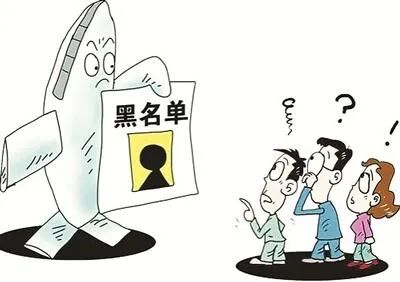
To take a simple example, I have heard a rumor that Nature and Science blacklist you after more than three consecutive rejections.
Char Siu Bun: I have not heard that, although an editor might form a poor impression. If the same editor in your field handles each submission and rejects it each time, their impression may worsen.
Honorary authorship may remain a recurring problem, but the quality of the work is what matters. Improving your research and paper is essential to better submission prospects. With quality in place, an appropriate submission strategy may also help the paper succeed.
We wish our fellow researchers smooth submissions, many publications, and success in their academic journeys!
Contributors: Friday (星期五), Char Siu Bun (叉烧包), Primeval Forest (原始森林)
Text editor: Fantuan (饭团)
Audio editor: Honey Peach Oolong (蜜桃乌龙)
Interviewers: Fantuan (饭团), Calorie (卡路里)
Recording: Honey Peach Oolong (蜜桃乌龙)
This article reflects the author's personal views, not those of this website. The original manuscript credits images to the internet and requests contact for removal if they infringe rights.
Restoration note, 2026-10-10: The complete text and credits are preserved. The blacklist caption is explicitly identified as an unverified rumor, and authorship standards are added so group customs and speculation are not mistaken for universal rules.
Supplementary references
Sources and editorial history
Restored from a complete historical article exported from the PhDSciNet Official Account.
Editorial revision: Restoration note, 2026-10-10: The complete text and credits are preserved. The blacklist caption is explicitly identified as an unverified rumor, and authorship standards are added so group customs and speculation are not mistaken for universal rules.