
Historical interview: the following preserves the research experiences and personal views expressed in the original manuscript.
Earth has undergone 4.6 billion years of change. Every patch of ground tells ancient stories, while stars above are renewed through fragmentation and recombination. Measuring the land with your feet and looking up at the stars may be a geologist’s ultimate romance. This installment follows their steps into the fascination of geoscience.
Contributor background: a fifth-year geology PhD student in Canada
Entering geology
Geography, geomorphology, and geology: connections and differences
Tiannanxing: when I say I study geology, people ask whether I mean geography. Geography is geographical study; geology is geological science. They also ask whether I explore caves. Most things we see at the surface are landforms, part of geomorphology, related to geology but not quite identical.
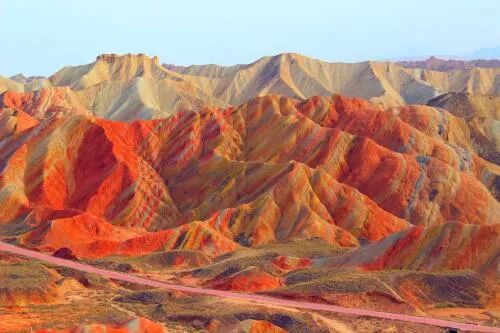
Geography resembles what we learned in secondary school, narrowly describing relationships between people and their natural environment. Geomorphology describes the surface and investigates the origin of landforms and factors changing them.
Geology may have a very long timespan, encompassing history before Earth’s formation. Human history is brief, and even the landforms we see changing over hundreds or thousands of years represent very short periods in geological time.
Concepts such as tectonics operate on very different historical scales from landforms. Some landform processes are studied over thousands or tens of thousands of years, while others evolve over millions. These fields do not have absolutely separate timescales, and much geological history is measured in millions and Earth’s origins hundreds of millions. Overall, geology is a broad science of what Earth consists of and why it formed.
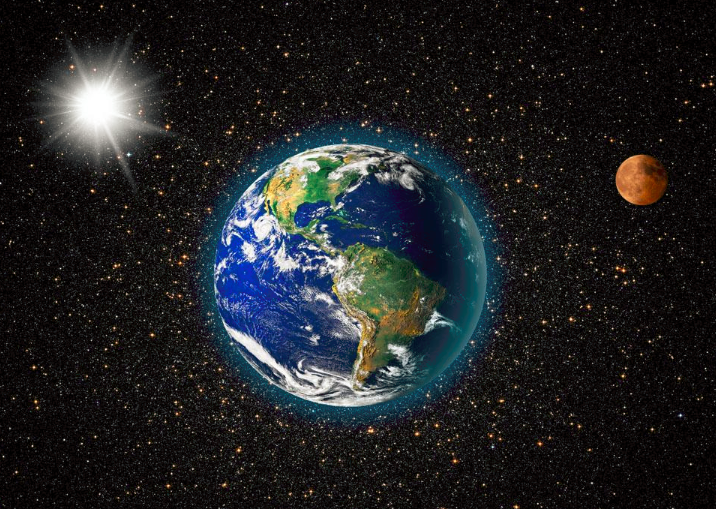
Earth is just one body in the solar system. A geology student’s first class must concern its origin, connected with the universe and other bodies. It is understandable that some geologists move toward astronomy because foundations are shared. Earth’s present condition is only one evolutionary stage; planetary evolution relates to interior cooling, but Earth cannot simply be said to become like Mercury and Venus after cooling; Venus still shows evidence of active volcanism.
Newborn Earth differed from today’s habitable Earth. Energy and material change continuously within it, and different geological specialties explore parts of that history.
What makes Quaternary geology distinctive?
Tiannanxing: the Quaternary is a geological time concept, alongside the Cambrian, Carboniferous, Permian, Triassic, and Jurassic. Dinosaurs lived in the Cretaceous and Jurassic, while humans live in the Quaternary. It divides geological time.
Many Quaternary deposits remain loose without substantial burial or lithification, but consolidated and volcanic rocks also occur in the Quaternary. Much geomorphology concerns this unconsolidated surface layer, often formed by erosion, transport, and deposition, but still affected by Quaternary faulting, folding, and volcanism.
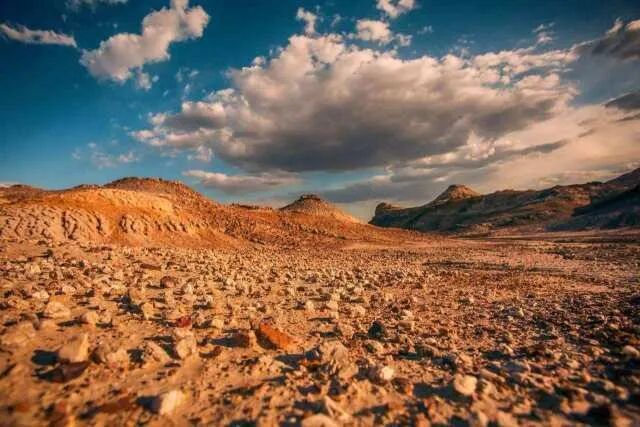
In deserts or the Gobi you see loose sand and soil, water-eroded traces, and windblown dunes: Quaternary deposits. A rock beneath a dune may appear simply buried, but the same lithology could extend one hundred, two hundred, or a thousand meters beneath it. It was there already, covered by Quaternary sediments.
Life’s influence on geology
Tiannanxing: the space supporting life is tiny relative to Earth’s volume, a very thin layer thinner than the crust. Life’s origin is fascinating and remains unresolved. Understanding it would mark a highly advanced stage for humanity.
As far as geological evidence of ancient life goes, if I remember correctly, it should be in the Precambrian period.
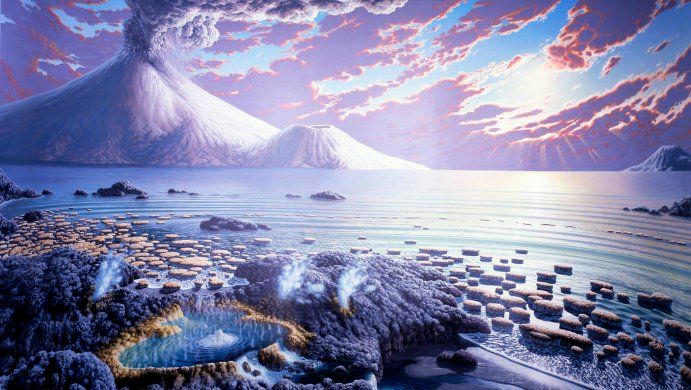
Looking at the stars and exploring cosmic origins
Earth’s origin: perspectives from physics and geology
Tiannanxing: geologists infer the past from what we currently see: the present is the key to the past. We can see the present, while the past must be inferred. Physics seems to me the reverse process: mathematical formulas and theories investigate origins and the objective basis of phenomena, explaining their causes and future evolution.
These approaches complement each other. The universe is coherent; we investigate it in different ways. A correct theory should be supported in the same direction by different evidence.
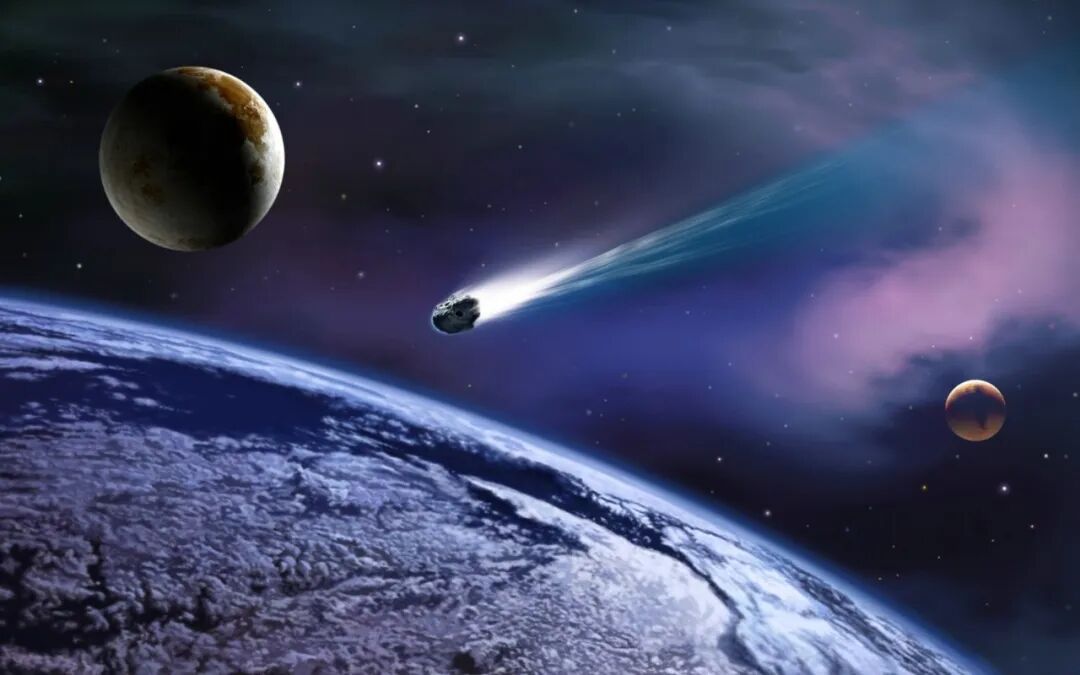
Earth’s elemental composition: clues from meteorites
Tiannanxing: here is a less familiar question for geology undergraduates. We know Earth’s elemental composition—which elements are most or least abundant—but how? The entire Earth cannot simply be measured directly in a laboratory, but laboratory analyses of rocks and meteorites, together with geophysical constraints, are important, so how did we establish it? I often use this question to challenge students, especially in geochemistry.
The answer is analysis of meteorite elements. Some primitive meteorites preserve clues to early solar-system material. Most meteorites are fragments of small bodies, not evidence that most celestial objects “disintegrated” in an undifferentiated stage. Their types and parent-body histories must be distinguished.
Earth evolved and differentiated, later developing tectonics. By collecting meteorites that reach Earth and examining their structure and composition, we can infer the original elemental composition.
Meteorites have different types. Those used to investigate the composition of early Earth, often include primitive chondrites, but these have different classes and metamorphic or alteration histories. Different fragments may still differ in composition; an arbitrary small sample does not necessarily represent an entire parent body or Earth.
A differentiated body may instead yield material from separate layers, preventing reconstruction of its overall elemental proportions from one fragment.
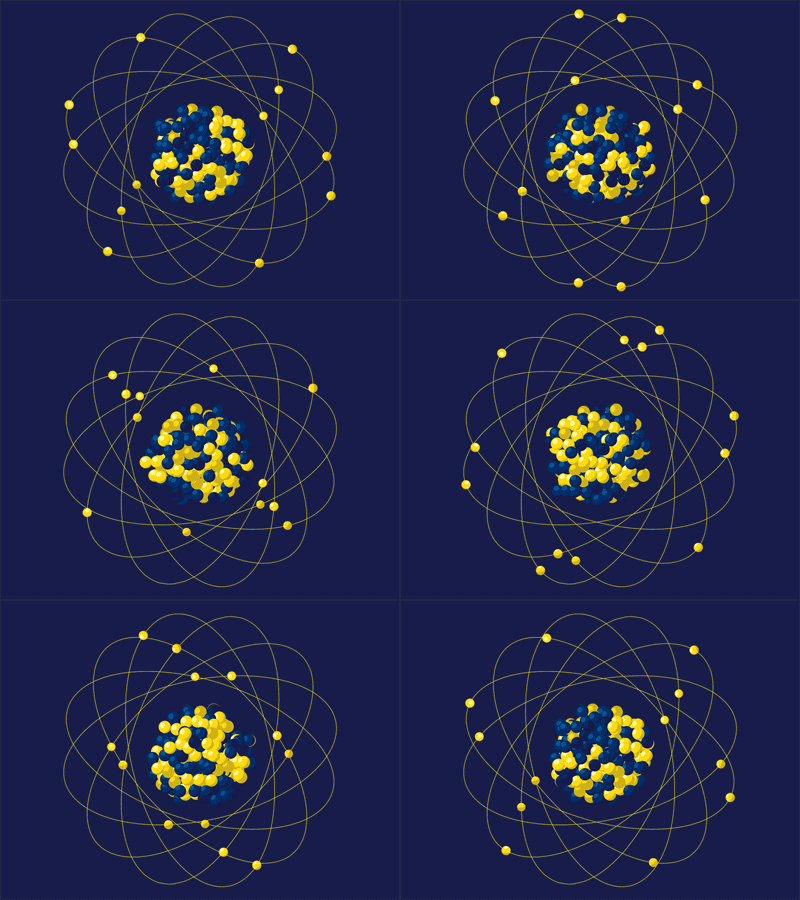
From an atom to the boundless universe
Tiannanxing: beginning with the Big Bang means discussing smaller constituents of elements: atoms.
The early universe mainly formed nuclei of light elements such as hydrogen and helium, with atoms forming later as it cooled. Heavier elements arose mainly in stars and other astrophysical processes, rather than ordinary atomic collisions progressively producing every element. Stars fuse hydrogen into helium and form heavier elements at appropriate stages. Earth’s core is predominantly an iron–nickel alloy with smaller amounts of other elements; magnesium should not be listed alongside iron and nickel as a main core component. These processes involve nuclear physics and stellar evolution.
Not all celestial bodies initially have the same elemental composition, but all begin from the smallest constituents and nuclear-fusion processes, rather than forming every element by simply joining two or four whole atoms.
Exploring the ground and its hidden treasures
Geoscience and the mysteries of ancient natural traces
Tiannanxing: geology is a broad basic discipline. I came from China University of Geosciences, where its branches become separate schools training students. Abroad, earth science offers common first- and second-year courses before specialization. Hydrogeology is popular, studying groundwater or surface water in relation to geology.
Some study soil, others bedrock and rock layers, or Quaternary geology—the present geological period and the loose deposits at the surface.
An interesting colleague specializes in diamond deposits. People think of extracting diamonds from underground kimberlite, but specialists in loose sediments search differently. Kimberlite exposed during the Quaternary is eroded and transported by rain, wind, and surface processes. They examine thick loose deposits and major glacial or river episodes, trace dispersion back toward kimberlite sources, and recover diamonds from transported material. It is an interesting Quaternary research direction.
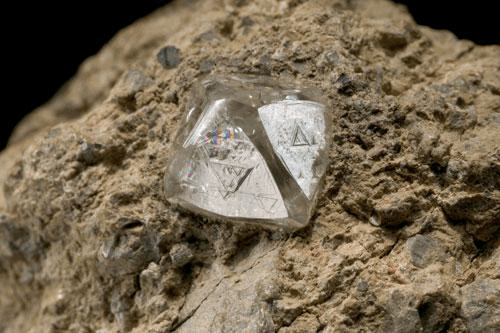
I place the rest under general geology: geochemistry, geophysics, tectonics, petrology, mineralogy, and related branches. Mineralogy leads to gemology and gemstone identification. Geophysics can extend to satellite images or technologies such as gravity surveys, magnetic methods, and seismic waves for subsurface investigation, which differ from astrophysical gravitational-wave observations.
Geological models and locating mineral resources
Tiannanxing: when seeking gold, metal, nonferrous or precious-metal deposits, oil, or gas, similar methods are used, usually drilling deeper. Buildings may be supported only in Quaternary deposits without reaching bedrock, while mineral exploration may drill ten to a hundred meters down.
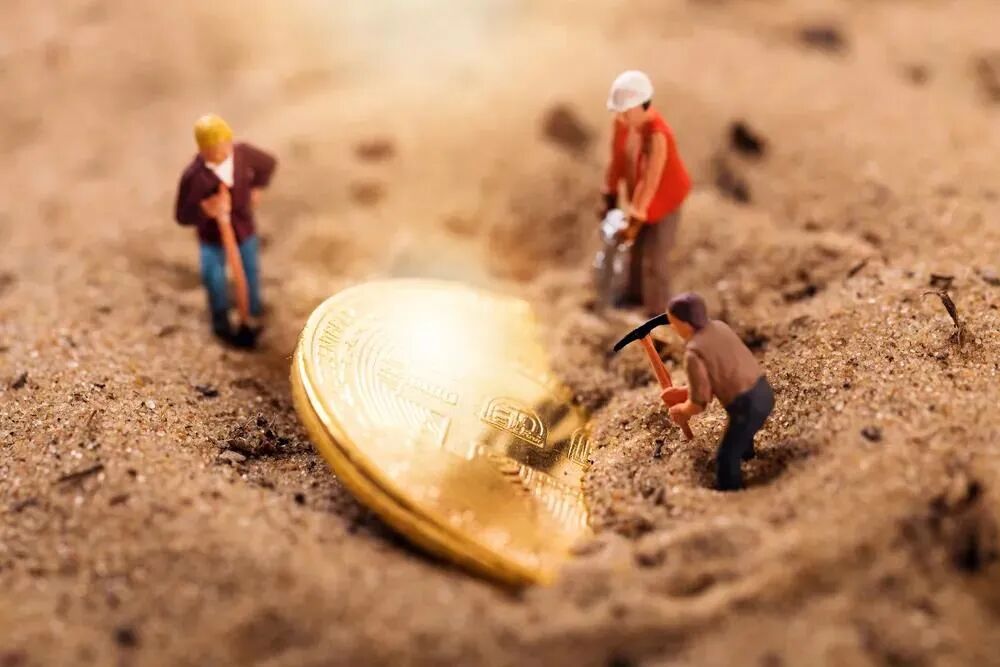
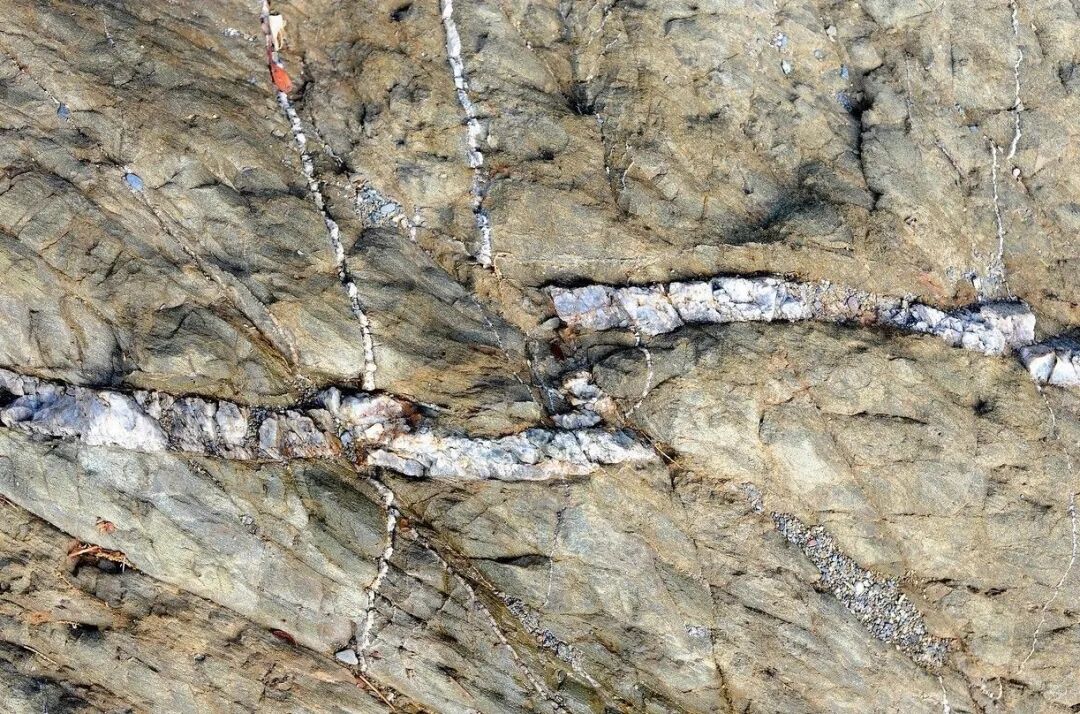
Precision matters. Ontario has several famous, productive gold mines. Exploration seeks the quartz veins containing gold. We stand on a two-dimensional surface, but vertical or inclined core drilling and extracted samples allow a three-dimensional model showing veins of the same generation at different depths. Connecting them in a computer model reveals where gold-rich veins lie.
That guides methods for bringing vein material to the surface. Though we cannot see underground directly, models indicate the layers containing gold and possible excavation routes: a large surface opening or a tunnel to a certain depth, then a direction to continue.
Calorie: your research seems to have considerable social and economic value.
Tiannanxing: it saves money by avoiding excavating an entire area, which might otherwise be unprofitable. People employ geologists to analyze whether a model is reasonable and the subsurface could have that structure.
Calorie: these models are usually effective and save much time, right?
Tiannanxing: a quartz vein can be treated as a two-dimensional planar feature whose location is generally determinable. Nature’s uncertainty is that even knowing a vein contains gold does not tell us precisely which part is enriched.
Calorie: providing guidance is already valuable.
Geological analysis tells stories of natural origins
Tiannanxing: production-related geology often seeks minerals, oil, or gas. As a basic science it also has many branches. Mineral research resembles chemistry or materials science; cosmetic talc, for example, is a mineral.
Researchers explore mineral properties and functions, sometimes finding new applications rather than new minerals. It resembles materials chemistry. Minerals are also crystals, so this work connects with everyday life.
Gemstones are another area. We do not design jewelry, but study identification, how to find gem-bearing deposits, and their geological environments. It is mineral exploration for gemstones. Chemical analysis also forms an interdisciplinary area, examining rock or meteorite elemental composition.
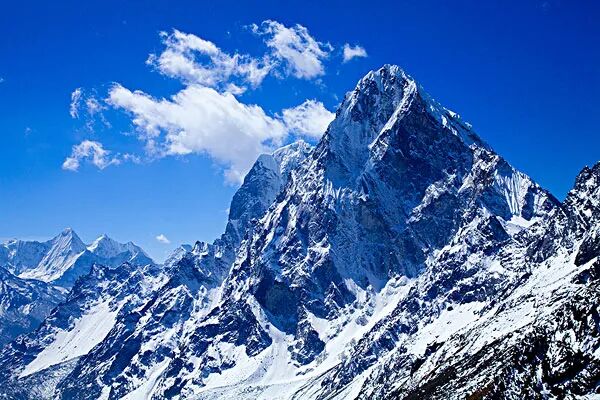
General geology tells a story from observed phenomena, perhaps two hundred or three hundred million years ago. Why are marine fossils high in the Himalayas? Were they once a sea? Geologically, rather than saying the mountains were a sea, a block containing former marine material became incorporated and uplifted into the Himalayas. Basic research may be less directly connected with daily life, but contributes greatly to understanding origins.
Gemstones: beautiful accidents of nature
Tiannanxing: every geology student has a favorite gem or mineral, perhaps not the most valuable one. Markets display their most beautiful forms; we also see their less attractive ones.
I like emerald because it is rare and good examples are hard to find. I also like sapphire because its formation conditions are demanding. Gem-quality formation has particular geological requirements, but sapphires occur in magmatic and metamorphic settings, not only at ultrahigh temperatures supposedly almost absent on Earth today.
Calorie: they are beautiful accidents.
Tiannanxing: yes, you could say that. To have market value, fewer fractures or undesirable inclusions are often preferred, but total absence of trace impurities is not required: iron and titanium, for example, help produce blue sapphire’s color.
Calorie: the conditions are demanding and fascinating. Every gemstone’s formation seems an interesting story.

From the Cambrian to the Quaternary, time turns; across mountains, rivers, glaciers, and deserts, geologists keep moving. They explore Earth’s origins and the universe’s enduring mysteries, seek hidden treasures, and appreciate nature’s generosity.
When beautiful rock thin sections meet light, the romance of geology quietly appears.
Science contributor: Tiannanxing
Editors: Calorie, Honey Peach Oolong
Audio editor: Honey Peach Oolong
Interview: Calorie
Audio recording: Honey Peach Oolong
This article expresses the author’s personal views and does not represent those of this website. Images were sourced online; please contact us regarding any infringement.
Additional sources checked
US National Park Service: Landforms and million-year timescales
US Geological Survey: Quaternary tectonics and volcanism
NASA: Continuing volcanic activity on Venus
US Geological Survey: Evidence for studying Earth’s interior
US Geological Survey: Earth’s interior and iron–nickel core
Smithsonian Institution: Stony meteorites and chondrules
NASA: Big-Bang nuclei and atoms
NASA: Stars and element formation
US Geological Survey: Gravity, magnetics, and mineral exploration
Gemological Institute of America: Corundum and emerald-deposit geology
Gemological Institute of America: Sapphire color and trace elements
Sources and editorial history
Restored from a complete historical article exported from the PhDSciNet Official Account.
Editorial revision: The historical interview and enthusiasm for geology are retained. Corrections cover landform timescales, Quaternary tectonics, planetary cooling, meteorite representativeness, elements and core composition, subsurface exploration, and gemstone composition. All original paragraphs and their original translations remain in private source records.