
Historical interview: the following preserves the research experiences and personal views expressed in the original manuscript.
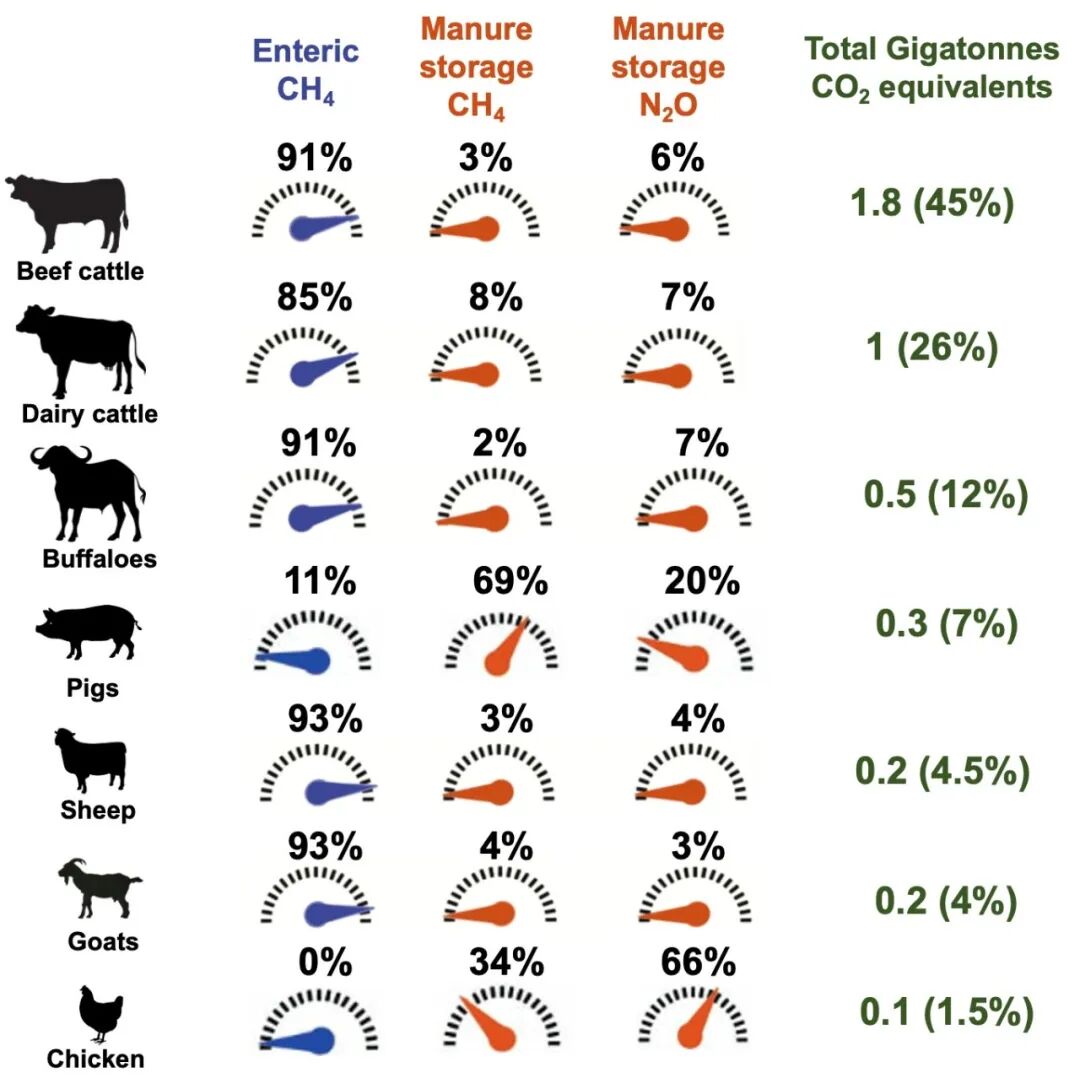
According to a report cited in the original manuscript in the UK newspaper The Guardian, some scientists said that producing one kilogram of beef creates more greenhouse-gas emissions than driving for three hours while leaving all the lights at home on. They also said cattle have a much greater negative environmental effect than other livestock, including pigs and chickens. Some scholars and experts have even called for reducing or eliminating beef and dairy consumption, but changing meat consumption is not the only way to reduce humanity’s environmental impact, and specific emissions comparisons depend on production systems and calculation assumptions.
Does cattle farming really have a major effect on global warming? Should people limit its development?
Why have cattle become a target of criticism?
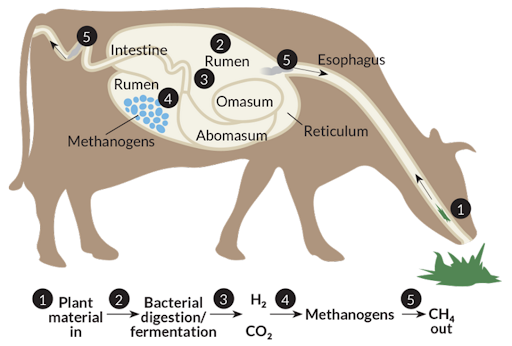
Orange Soda: cattle are simply one example of ruminants. Strictly speaking, they attract attention because we raise so many. Cattle, sheep, and other ruminants have similar digestive systems, differing from humans, pigs, and chickens in having a stomach with four compartments, one of which—the rumen—is very large. It is like a large fermentation tank containing bacteria, fungi, archaea, protozoa, viruses, and other microorganisms. They digest foods we cannot absorb and use, such as corn stalks. Ruminants’ rumens help turn waste into value: they digest by-products, stalks, and other roughage for the animals, which then convert it into meat and milk.
1. Archaea
Orange Soda: archaea in the rumen are mainly methanogens. During growth and metabolism, they use hydrogen and carbon dioxide produced by other microorganisms to form methane, released mainly through belching from the mouth, with a small amount through the intestine. Methane is an important contributor to the greenhouse effect: the manuscript’s factor of 28 is an assessed 100-year global warming potential (GWP100): on that scale, one tonne of methane corresponds to about 28 tonnes of carbon dioxide equivalent, rather than being a fixed factor for every time horizon. This is why increasing attention is paid to cattle farming’s contribution to global warming.
Methane production is part of regulation within the cow. When bacteria and other microorganisms digest feed, they produce large amounts of carbon dioxide and hydrogen, which need to be expelled or consumed. Methanogenic archaea use them to form methane. These archaea are abundant in ruminant rumens, but relatively less abundant in single-stomached animals such as humans, pigs, and chickens. In those animals, microbial fermentation mainly takes place in the intestine, whereas stomach digestion mainly relies on enzymes. Without the rumen’s natural fermentation tank, humans cannot use roughage cellulose as efficiently as ruminants; this does not mean humans cannot digest other nutrients in high-fiber foods.
Cattle are larger than other ruminants and naturally produce more greenhouse gases, which is another reason the sector receives most attention.
2. Greenhouse gases produced by cattle farming
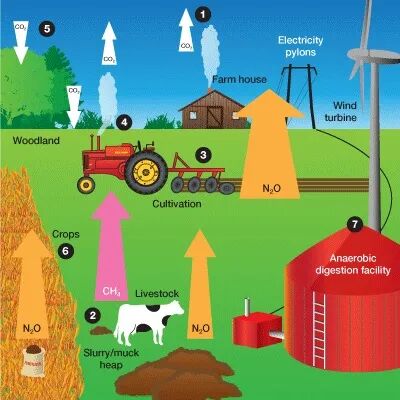
Orange Soda: carbon dioxide, methane, nitrous oxide (N₂O), and other greenhouse gases from cattle farming mainly come from cattle, farm activities during animal management and production, and feed production, processing, and transportation.
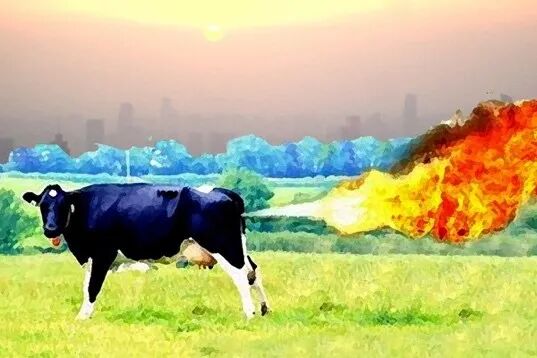
Methane from cattle’s enteric fermentation leaves mainly through the mouth, especially in belches, rather than simply through lung respiration. The manuscript cites estimates of about 95% via the mouth, 5% via the intestine, and 220 pounds per cow annually. Actual emissions vary with animals and production conditions and are not fixed for every cow. Depictions attributing emissions mainly to flatulence, such as the one below, are therefore inaccurate.
Farms also often store manure, particularly cattle farms in China. Farms abroad have their own fields and can take manure directly back to the land, but in China we cannot do that, so most farms need an oxidation pond to store it. During storage, methanogenic archaea in manure produce large amounts of methane that escape into the environment.
Emissions content check: manure storage and land application vary by region, land access, and production system; they cannot be divided simply into “all foreign farms have land and Chinese farms do not.” Good manure management can benefit soil, but storage and application can also emit methane and nitrous oxide and require a broader assessment.
Does cattle farming really worsen the greenhouse effect?
Orange Soda: many environmentalists and vegetarians call for eating less beef and more plant-based food because cattle damage the environment. I would like to use this opportunity to make a case for cattle farming.
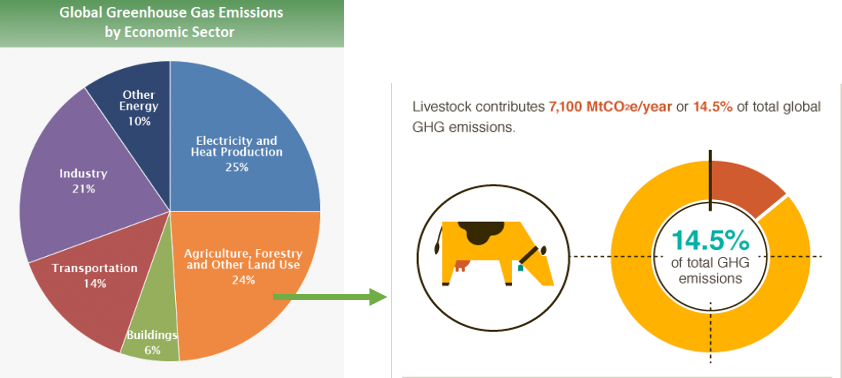
In the IPCC Fifth Assessment Report, net emissions from agriculture, forestry, and other land use (AFOLU) accounted for about 24% of global human-caused greenhouse gases in 2010. The manuscript’s 14.5% livestock estimate instead comes from FAO’s 2013 livestock-supply-chain assessment, using a reference period around 2005 and covering all livestock, including cattle. Different periods and accounting boundaries mean 14.5% cannot be treated as a directly comparable component of 24%, or used to conclude that cattle farming has little effect on warming. It is not the sole source of global warming, but remains an important area for emissions reductions.
Alongside its greenhouse-gas effects, cattle farming has benefits for food supply, soil fertility, and reduced soil compaction. The rumen and its many microorganisms allow cattle and other herbivores to digest grass, stalks, shrubs, and other roughage containing large amounts of cellulose, hemicellulose, and other cell-wall components; lignin is not cellulose and limits roughage digestion. These are materials that humans, pigs, and chickens cannot digest and absorb. Humans eat cellulose to support intestinal function and bowel movements, but lack enough cellulose-digesting intestinal microorganisms to use large amounts of fiber. With a rumen, cattle can convert “waste” stalks into milk and meat for us, and use food-industry by-products such as soybean meal and brewers’ grains. That can reduce competition between humans and animals for food. Manure returned to fields contains nutrients and microorganisms beneficial to soil, helping organically improve fertility and compaction. This matters for ecological improvement and greener agriculture.
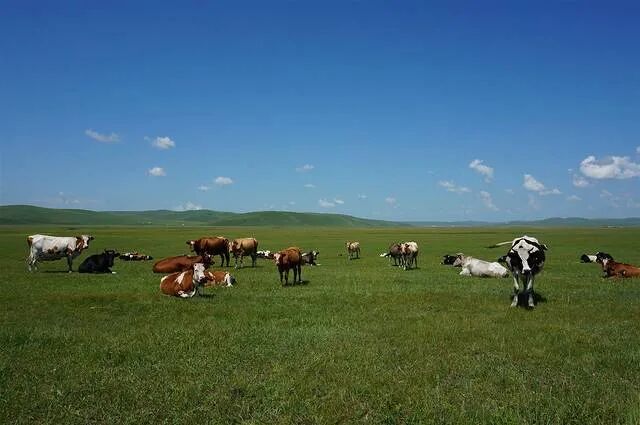
How can cattle farming reduce greenhouse-gas emissions?
Orange Soda: scientists worldwide have been studying ways to reduce livestock greenhouse gases, proposing approaches such as changing cattle diets, vaccination, and breeding lower-emitting cattle. Companies are also developing feed additives to suppress digestive methane production, including monensin (Rumensin™), yeast cultures, and plant extracts. Although such technologies can reduce methane, effects may not last and feed costs can rise. Gene editing and selection for low-methane cattle with high feed efficiency could economically reduce emissions while meeting rising demand for animal protein as populations grow.
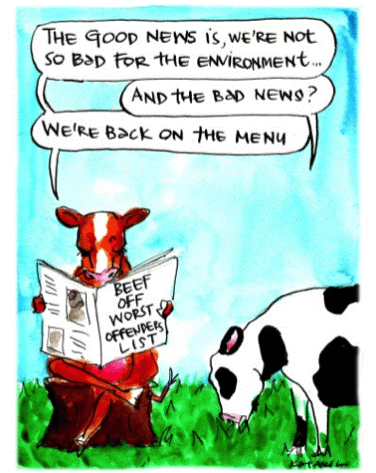
We hope scientists around the world can work together to develop practical measures reducing cattle farming’s greenhouse gases, creating a lower-emission, more sustainable future for agriculture.
Science contributor: Orange Soda
Text editors: Fantuan, Calorie
Audio editor: Honey Peach Oolong
Interview: Fantuan, Calorie
Audio recording: Honey Peach Oolong
This article expresses the author’s personal views and does not represent those of this website. Images were sourced online; please contact us regarding any infringement.
Additional sources checked
University of California, Davis: How cattle produce methane
Environment and Climate Change Canada: 100-year global warming potentials
IPCC Fifth Assessment Report: Sectoral emissions in 2010
UN Food and Agriculture Organization: Livestock and climate-change assessment (2013)
UN Food and Agriculture Organization: Feed-use efficiency in ruminants
Sources and editorial history
Restored from a complete historical article exported from the PhDSciNet Official Account.
Editorial revision: The historical discussion and emissions-reduction outlook are retained. Stomach compartments, methane’s release route and 100-year comparison, nitrous oxide, lignin, and emissions-data sources and accounting boundaries were corrected.