English translation of the original Chinese article. Publication dates and the extent of recovered text are preserved. Figures retain their original labels. Read the Chinese original.

University of Waterloo/Faculty of Engineering
Keywords: airfoils, fluid mechanics
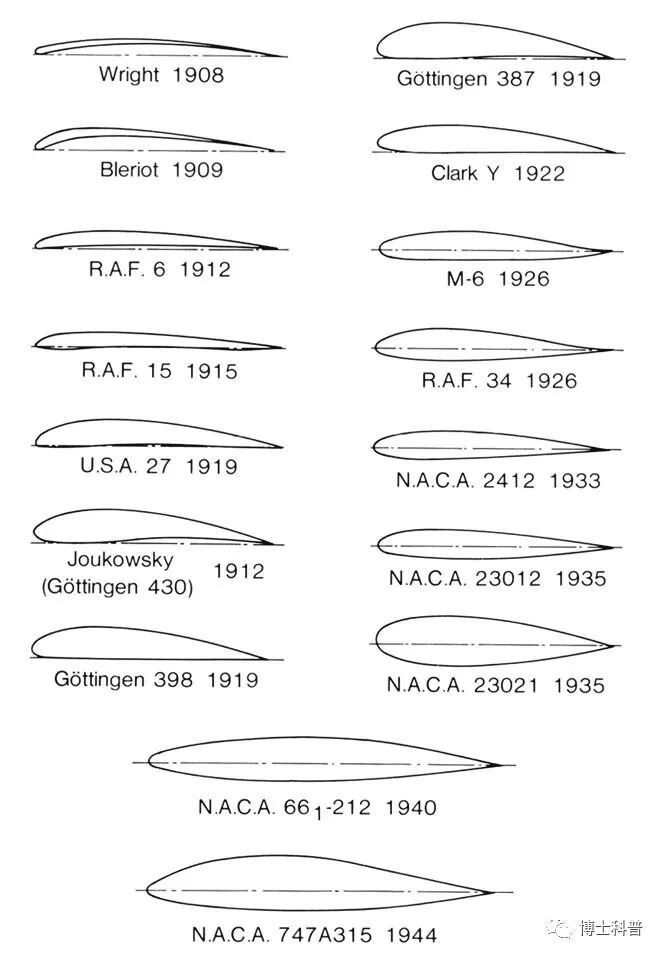
If someone asked me to name an invention as important as the wheel, I would say “the airfoil” without hesitation. In its narrower sense, an airfoil is the cross-sectional shape of an aircraft wing. This design, combining mechanics with aesthetics, has brought the performance of modern aircraft to its fullest potential. Wheels let people race across the land; airfoils let us soar freely through the sky. Figure 1 shows the evolution of aircraft airfoils beginning with the Wright brothers. These enormous changes chiefly reflect the gradual increases in the design speeds and payloads of modern aircraft. Subsonic and supersonic airfoils, for example, have completely different geometries. If humanity discovered an extraterrestrial civilization living in an atmosphere as we do, simply capturing one of its aircraft and examining its airfoil might offer a glimpse of its industrial development. In fact, airfoils appear not only in aircraft wings but also in ship propellers, the blade cascades of thermal and hydroelectric turbines, helicopter rotors, and wind-turbine blades. It is no exaggeration to say that, without airfoils, more than half of humanity’s industrial activities would slow down or come to a halt. As airfoils evolved, our understanding and improvement of them depended on advances in fluid mechanics. Scientists’ theoretical study of airfoil performance is rather like the Heaven Sword and Dragon Saber in The Heaven Sword and Dragon Saber: this thread runs through more than two centuries of the development of classical, early modern, and modern fluid mechanics.
Figure 1: The evolution of early aircraft airfoils
Bernoulli and Euler — Early Voices of Classical Fluid Mechanics (1738–1783)
The story begins in 1738. That year, Daniel Bernoulli (1700–1782) discovered the famous Bernoulli principle and published it in his new book Hydrodynamics. Bernoulli’s principle describes an ingenious balance between kinetic energy and pressure energy in a fluid: lower kinetic energy corresponds to higher pressure energy. When we blow across a coin on a table, it sometimes jumps. This happens because different airflow speeds above and below the coin create a pressure difference across its surfaces, and that difference drives the coin’s motion. To a degree, this principle could already explain the power of sails and windmills at the time, and even the source of an airfoil’s aerodynamic force. Bernoulli had not, however, found a quantitative expression for the principle. He therefore sent his ideas in a letter to his close friend—playfully described as his “bromance” partner—Leonhard Euler (1707–1783), who was working at the Berlin Academy of Sciences. Euler and Bernoulli had been fellow students at the University of Basel in Switzerland. Bernoulli’s father, Johann Bernoulli, was also Euler’s university teacher and had encouraged him to switch from theology to mathematics. Beginning in 1726, Euler and Bernoulli maintained a correspondence for 42 years, discussing difficult problems in mathematics, mechanics, and astronomy. After reading Bernoulli’s letter, Euler conceived of applying Newton’s second law to fluid analysis, a very forward-looking idea at the time. Finally, in 1752, Euler derived a general expression for Bernoulli’s principle and named it Bernoulli’s equation. The equation successfully described the principle quantitatively, but its limitations were obvious: it could describe changes in a fluid only along a streamline. Streamlines around complicated geometries are themselves exceptionally complicated, making it difficult to use this equation to determine the forces on a general shape. Euler soon recognized the problem and, in 1757, obtained a more general form of Bernoulli’s equation: the Euler equations. Born out of this correspondence, these equations inadvertently opened the door to ideal fluid mechanics. Strictly speaking, the Euler equations contain only two equations, one for conservation of momentum and one for conservation of mass. Written in tensor form, they occupy only four or five inches of paper. Yet that four- or five-inch formula encompassed nearly two thousand years of human knowledge of fluid mechanics, from Archimedes to 1757, displaying the elegant simplicity of physics. Unfortunately, there was no way to solve the Euler equations when they were first proposed; even Euler himself did not obtain their general solution. In 1783, Euler died of illness at his home in Saint Petersburg, Russia. At the moment of his death, a manuscript calculating the ascent of hot-air balloons—another fluid-mechanics problem—still lay on his desk. As the song says, he tirelessly climbed one hill after another, never seeing the immortality he sought, yet becoming immortal himself.
Joukowsky and Kutta — A New Path Opens (1783–1910)
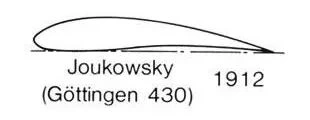
In research toward the end of the eighteenth century, scientists gradually discovered that the Euler equations could be separated into two simpler equations and solved individually: the famous Bernoulli equation mentioned above and the equally celebrated Laplace equation (1799). Bernoulli’s equation was already well understood, so the key to solving the Euler equations became the solution of Laplace’s equation. Fortunately, when the French mathematician Pierre-Simon, marquis de Laplace (1749–1827) proposed the equation, he had already pointed out that its solutions were a special kind of function: harmonic functions. He also noted that the seemingly complicated solution space of Laplace’s equation was actually formed by the linear superposition of a few kinds of harmonic functions, much as a handful of simple notes can build a richly varied symphony. Guided by this idea, scientists used complex-function theory to solve Laplace’s equation and successfully solved the Euler equations for flow around a cylinder. As an aside, Laplace famously said, “Read Euler, read Euler; he is the master of us all.” Solving the Euler equations quietly linked the two men’s names even more closely. Using this method, researchers went on to solve the forces on spheres and ellipsoids. An effective method for arbitrary complicated closed shapes, however, was still lacking. The turning point came almost a century later, once again on the Russian soil where Euler lay at rest. Building on complex functions, the mathematician Nikolay Yegorovich Zhukovsky (1847–1921), also known as Joukowsky, introduced the concept of conformal mapping. This transformation could turn a complicated geometry into a cylinder in another space. It was like two parallel worlds in which all elements correspond one to one, but take entirely different forms. Through conformal mapping, complicated geometries in physical space could be simplified into eccentric cylinders in another space, and the study of flow around cylinders had conveniently been completed in the preceding century. Using this method, he derived the famous Joukowsky lift theorem. The theorem states that the fluid force on an arbitrary geometry is proportional to the cross product of the incoming-flow velocity vector and the circulation along the body’s surface—the line integral of velocity along that surface. Two centuries after Bernoulli, this quantitative expression had finally been discovered. Its proof was astonishingly elegant, and its conclusion remarkably simple! Once the circulation was determined, the force on an airfoil could readily be calculated and the airfoil designed. What was missing was a condition that would specify a unique solution. By 1910, Joukowsky and the German mathematician Martin Kutta (1864–1944) had independently discovered this condition—there is always someone far away whose thoughts meet yours. The first genuinely modern airfoils then appeared: Joukowsky airfoils, as shown in the cover image. Joukowsky also oversaw the construction of the world’s first wind tunnel in Russia, and airfoil development began to accelerate.
Prandtl and Boundary-Layer Theory — Into the Singularity (1910–1946)
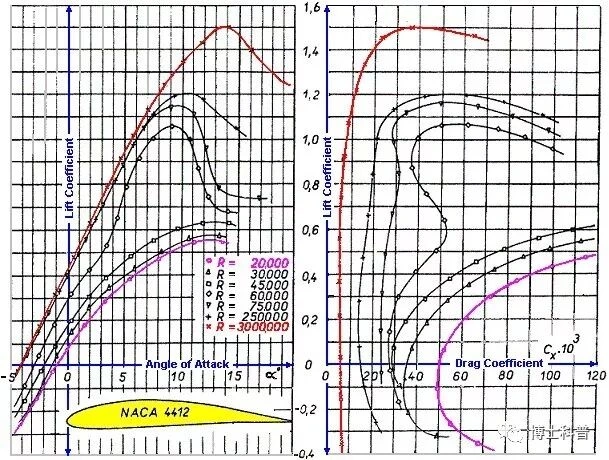
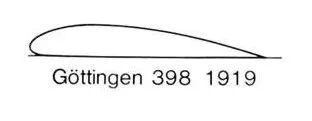
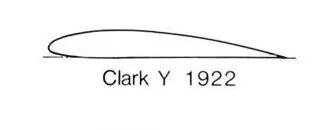
During this period, theoretical results were successfully combined with wind-tunnel experiments, and airfoil design theory gradually matured. The patterns governing airfoils were condensed into the lift curve shown on the left in Figure 2 below. Its horizontal axis represents the airfoil’s adjustable range—the angle of attack—and its vertical axis represents its output, or lift. Researchers gradually recognized two points: 1. Airfoil camber helps increase its maximum output; 2. Airfoil thickness can increase its adjustable range, raising the stall angle of attack and moving the peak of the curve to the right. Both features, camber and thickness, appeared in the Göttingen airfoils that were best known at the time (see Figure 1). One particularly interesting airfoil from this period was the Clark Y, proposed when the American aeronautical engineer Virginius Evans Clark (1886–1948) tried to improve a very unsuccessful Göttingen airfoil, Göttingen 398. The Clark Y’s lower surface is almost entirely flat. Interestingly, although its aerodynamic performance fell well short of Clark’s expectations, it greatly simplified the manufacture and installation of wings and propellers, and soon became the most popular airfoil. These theoretical explorations and engineering practices ultimately led to the widely used NACA airfoil families. The greatest contributions came from two American aerodynamicists, Eastman Jacobs (1902–1987) and Theodore Theodorsen (1897–1978). Their method was precisely the complex-function analysis developed by Joukowsky. Theodorsen was a particularly compelling scientist: he could undertake the most difficult theoretical research and apply its results to NACA’s practical needs. His work also had a distinctive style. Unlike other aerodynamicists of the period, such as von Karman, he sought exact rather than approximate solutions for airfoil pressure distributions [1]. His research in aerodynamics, airfoil flutter, and relativity continues to offer insights to researchers today. Interestingly, Jacobs and Theodorsen often argued in NACA’s meeting room. In most cases, Theodorsen overwhelmed Jacobs with his superior mathematical expertise. Through these debates, however, Jacobs gradually identified the most serious weakness of Joukowsky’s method: the singularity. All analysis took place outside the singularity; nobody knew what lay inside it. Experiments at the time also showed that Joukowsky’s method could not analyze airfoil drag or stall—the descending portion of the lift curve. The German scientist Ludwig Prandtl (1875–1953) answered these questions. His newly proposed boundary-layer theory suggested that inside the “singularity,” just beyond the body’s boundary, there was a “thin layer” in which viscous effects were strong. He also proposed its governing equation, the boundary-layer equation. This theory addressed the singularity in theoretical research and explained the origins of airfoil drag and stall in engineering, marking the beginning of early modern fluid mechanics. After learning about the theory, Jacobs successfully applied it to airfoil design. This work gave rise to low-drag NACA laminar-flow airfoils and the P-51 Mustang, then the most advanced fighter of the US Army Air Forces, thereby influencing the course of the Second World War. In 1928, the British aerodynamicist Hermann Glauert (1892–1934) proposed a theory of compressible aerodynamics, marking humanity’s ability to design faster aircraft. Driven by the military industry of the time, human travel speeds rose by a full order of magnitude compared with the previous century, transforming information exchange, transport, warfare, and much else in society.
Figure 2: Lift and drag curves for NACA airfoils
Turbulence — Mysteries and Reflections (1946–present)
In his boundary-layer theory, Prandtl proposed an approximate model—the mixing-length model—to account for turbulent boundary-layer effects. Turbulent boundary layers produce more drag than laminar ones. Many of his students tried to abandon this approximation and obtain an exact description of turbulence to close the boundary-layer equations, but every attempt failed. The problem of turbulence actually originated in the British scientist Osborne Reynolds’s (1842–1912) study of pipe flow in 1883. Under “certain conditions,” a small disturbance at a pipe’s inlet can make the fluid throughout the pipe turbulent—the butterfly effect. Interestingly, solutions of the viscous-fluid equations, the Navier–Stokes equations, can also be indeterminate under “certain conditions”; in other words, their solutions are chaotic. Turbulence thus possessed its enigmatic character from the beginning. It is said that, before his death, the German physicist Werner Heisenberg (1901–1976) remarked, “When I meet God, I will ask him two questions: what is relativity, and what is turbulence? But I believe he has an answer only to the first.” Unfortunately, traces of turbulence can be found over most airfoils. In 1945, the Chinese physicist 周培源 completed a paper on turbulence in Kunming under Japanese bombardment: “on velocity correlations and the solutions of the equations of turbulent equation.” In 1946, the world’s first computer, ENIAC, was born. These two achievements directly gave rise to the engineering turbulence models most widely used today [2], allowing researchers to solve turbulence problems on computers. Yet humanity’s exploration of turbulence has only just begun. Looking back—from Bernoulli to Euler, from Laplace to Joukowsky, and from Theodorsen to Prandtl—it feels as though something has quietly connected these scientific investigations over more than two hundred years. Perhaps it is the airfoil; perhaps it is human curiosity about the unknown and our unrelenting pursuit of truth.
References:[1] R. T. Jones. Classical Aerodynamic Theory, NASA report (1050), P257-291, 1979.
[2] B. E. Launder, D. B. Spalding. The Numerical Computation of Turbulent Flows, Numerical Prediction of Flow, Heat Transfer, Turbulence and Combustion, P96-116, 1983
Illustrations from the matching WeChat article
The following illustrations were recovered from the matching article retained in the WeChat account and restored in their original order.
Additional illustrations were recovered from the matching article retained in the WeChat account and collected after the main text; the archived text and existing editorial corrections are retained.