
Historical legal commentary: The original views and byline concerning the 2020 Soleimani incident are preserved below. The original publication date remains unverified, and the author's identity and affiliation are retained as introduced in the manuscript. This is not legal advice for a current individual case.
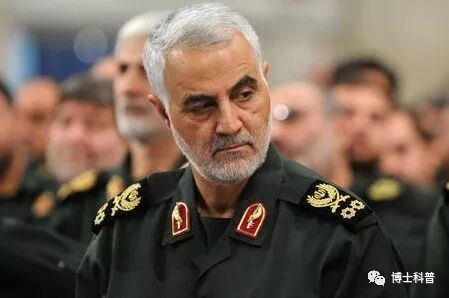
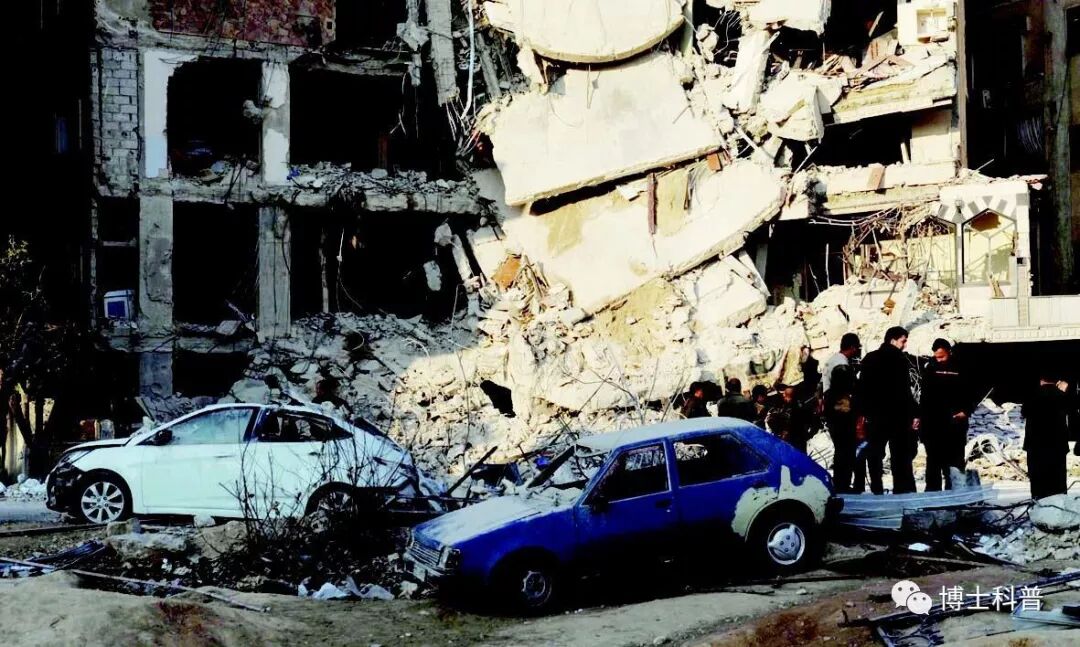
On 3 January 2020, near Baghdad airport in Iraq, a U.S. drone strike targeted Qasem Soleimani, commander of Iran’s elite Quds Force. Soleimani was confirmed dead. This was not the first time the United States had used drones to pursue a policy of targeted killing in the name of counterterrorism.
For example, in September 2011, the United States used a drone in Yemen to attack the U.S. citizen Anwar al-Awlaki, sometimes nicknamed the “bin Laden of the internet.” The aim of combating terrorism is, of course, legitimate. Yet the legality of using drones in another country’s airspace to kill suspected terrorists remains highly controversial under both U.S. domestic law and international law. This article seeks to offer a framework for discussing the legality of targeted killing from the perspective of international humanitarian law. It does not discuss the legal status of the Quds Force, whether Soleimani was a terrorist, or detailed evidentiary questions concerning the Soleimani incident.
What is targeted killing?
First, targeted killing is a political term rather than a defined legal category. Many English-language news outlets use “targeted killings,” “raid,” or “elimination” to describe this governmental counterterrorism policy. Second, international-law scholars define targeted killing in different ways. Scholars who support the practice regard it as a method of warfare against irregular forces, while those who oppose it regard it as equivalent to assassination.
In 2010, Philip Alston, Special Rapporteur reporting to the UN Human Rights Council, stated: “A targeted killing is the intentional, premeditated and deliberate use of lethal force, by States or their agents acting under colour of law, or by organized armed group in armed conflict, against a specific individual who is not in the physical custody of the perpetrator.” Examples include the use of drones by the U.S. Central Intelligence Agency or military to attack members of al-Qaeda and associated armed actors in Afghanistan, Pakistan, Yemen, Somalia, and elsewhere. In this formulation, “in armed conflict” qualifies organized armed groups; it cannot be taken to presume that all targeted killings carried out by states occur in armed conflict. Whether an armed conflict exists determines how international humanitarian law is distinguished from human-rights law and the law-enforcement framework. Whether targeted killing complies with international humanitarian law remains highly contested among scholars.
What is international humanitarian law?
Modern international humanitarian law is generally understood to encompass Hague law and Geneva law. It is the contemporary term for the traditional law of war and law of armed conflict. The International Committee of the Red Cross defines it as international rules established by treaty or custom that seek to resolve humanitarian problems directly arising from international and non-international armed conflicts and, for humanitarian reasons, place limits on the methods and means of warfare used by parties to a conflict in order to protect persons and property affected, or potentially affected, by armed conflict. International humanitarian law governs not only wars but also international and non-international armed conflicts; it regulates military operations and protects victims of war.
Does international humanitarian law apply to targeted killing?
Whether the rules of international humanitarian law apply to targeted killing depends on whether the confrontation between a terrorist organization and a sovereign state constitutes an armed conflict governed by that body of law. The Bush administration spoke of a “war on terror,” while the Obama administration no longer used that expression. The United States nevertheless continued a worldwide “counterterrorism war.” But the use of the word “war” does not itself mean that international humanitarian law applies to targeted killing. In fact, neither the four Geneva Conventions of 1949 nor their two Additional Protocols of 1977 expressly defines “armed conflict.”
The existence of an armed conflict should be assessed using objective criteria, such as the scale and severity of violence, its duration, the extent of the parties’ territorial control, and their degree of organization. Whether the parties acknowledge the existence of an armed conflict is a subjective criterion and should not determine the assessment. These indicators must be understood in relation to the type of conflict and the applicable provisions; territorial control is not a necessary condition for every non-international armed conflict.
Whether international humanitarian law applies to targeted killing requires examining each particular operation; it cannot be accepted or rejected in the abstract. More specifically, five aspects generally need to be considered. (1) Both parties to the confrontation have a degree of organization. In practice, some terrorist organizations, such as al-Qaeda and the Islamic State (ISIS), meet the organization requirement. Israel has also directly attacked Hezbollah in Lebanon. At the time, the confrontation took place principally between the Israel Defense Forces and Hezbollah, while the Lebanese armed forces did not actively participate in hostilities. The Commission of Inquiry on Lebanon ultimately recognized it as an international armed conflict involving Israel, Lebanon, and Hezbollah. (2) The beginning and end of the conflict can be identified. Given the temporal ambiguity of the “war on terror” and the classification of armed conflicts, international humanitarian law may apply. (3) The particular act has a connection to the armed conflict. If a targeted killing is connected to an armed conflict between a terrorist organization and one or more states, international humanitarian law may apply. (4) The intensity of violence. Unlike lower-level violence or domestic law enforcement, hostilities in an armed conflict must attain a certain intensity. A distinction is needed here: international armed conflict generally does not require a particular threshold of violence, whereas non-international armed conflict requires a minimum level of organization among armed groups and a minimum level of intensity in the violence. For example, Philip Alston considered the confrontation between Hezbollah in Lebanon and Israel an armed conflict. (5) Territorial connections. Armed conflict has traditionally been understood as connected to territory. In an international armed conflict, a state’s military operations generally infringe another state’s territorial sovereignty. In a non-international armed conflict, violence is generally connected to struggles over territory and eventual effective control of the relevant state or part of its territory. Some terrorist organizations, however, have ideological goals rather than territorial ambitions; al-Qaeda is an example. The author uses this to discuss the complexity of territorial connections in counterterrorism operations. The geographical scope of international humanitarian law nevertheless remains legally contested: a worldwide “war on terror” label does not turn the whole world into a battlefield.
Does targeted killing comply with international humanitarian law?
When international humanitarian law applies to a particular targeted killing, its compliance with that law must be assessed step by step.
1. The principle of distinction. If a targeted killing constitutes an operation in an armed conflict, it must comply with the most basic principles of international humanitarian law. Under the principle of distinction, only lawful targets may be deliberately attacked. Are terrorists lawful targets of targeted killing? This question itself deserves careful discussion. The attacker’s status and entitlement to combatant privilege must also be considered separately from the legality of the target and the method of attack. It is incorrect to summarize the rule as “only attacks carried out by combatants comply with international humanitarian law.” Operations authorized by the CIA and those authorized by the Pentagon may therefore raise different questions of status and domestic criminal liability, but both must comply with applicable international humanitarian law.
2. The principle of proportionality. This principle prohibits attacks expected to cause incidental civilian deaths or injuries, or damage to civilian objects, that would be excessive in relation to the concrete and direct military advantage anticipated. Note that the relationship between harm to enemy combatants and military advantage to one’s own side is not the test of proportionality.
3. The principle of necessity. This principle requires operations to respect prohibitions such as the ban on perfidy and the limits of military necessity. An aim of weakening the enemy’s military strength cannot make methods prohibited by international humanitarian law lawful; military necessity must be understood within those prohibitions and limitations.
Professor Kretmzer argues: “Although the relevant international humanitarian law treaties do not expressly regulate conflicts of this kind, arguing that international humanitarian law does not apply to them requires showing that the relevant actors are not bound by that law.” Whether international humanitarian law applies to targeted killing requires examining each particular operation; it cannot be accepted or rejected in the abstract. Overall, it may apply to a specific targeted killing. When its rules apply, the legality of the act needs to be judged according to distinction, proportionality, and necessity. Finally, deciding whether an armed conflict between a terrorist organization and a state is governed by the rules for international or non-international armed conflicts may present limitations and difficulties in practice and merits further study.
*This article represents the author’s personal views, not those of this website. Other media outlets, websites, or individuals reproducing it must identify the source and assume responsibility for copyright and other legal matters. Authors who do not wish their work to be reproduced, or who wish to discuss reproduction fees, should contact us.
About the author

Hello, everyone! I am Tan Yudan from the Boke team:
Institution: PhD studies in law at Leiden University.
Research interests: International law and international criminal law.
Editorial note
During migration, minimum corrections were made to the institution's name, the scope of the targeted-killing definition, the organization and intensity requirements for non-international armed conflict, the distinction between combatant privilege and legality of conduct, proportionality, and the limits of military necessity, using the UN Special Rapporteur's report, Tadić, and ICRC materials. The manuscript's case discussion and personal views are preserved. This article examines the international-humanitarian-law questions it identifies; it does not establish the overall legality of a specific operation under all applicable international law.
Supporting references
Alston: 2010 study on targeted killings (A/HRC/14/24/Add.6)
Tadić: 1995 jurisdiction appeal decision
ICRC: Organization and intensity in non-international armed conflict
ICRC: Interpretive Guidance on Direct Participation in Hostilities
ICRC Customary IHL Rule 14: Proportionality
ICRC Customary IHL Rule 65: Perfidy
Sources and editorial history
Restored from a complete historical article exported from the PhDSciNet Official Account.
Editorial revision: During migration, minimum corrections were made to the institution's name, the scope of the targeted-killing definition, the organization and intensity requirements for non-international armed conflict, the distinction between combatant privilege and legality of conduct, proportionality, and the limits of military necessity, using the UN Special Rapporteur's report, Tadić, and ICRC materials. The manuscript's case discussion and personal views are preserved. This article examines the international-humanitarian-law questions it identifies; it does not establish the overall legality of a specific operation under all applicable international law.