
English translation of the original Chinese article. Publication dates and the extent of recovered text are preserved. Figures retain their original labels. Read the Chinese original.
University of Waterloo
Keywords: perfluorinated compounds, drinking water, safety
Water is the source of life. A typical adult normally drinks around 1500–2000 ml of water each day, so the cleanliness and safety of drinking water directly affect our health. The water-quality indicators we commonly focus on include microorganisms, heavy metals, disinfection by-products and other toxic organic and inorganic substances. Many people do not realize, however, that a class of synthetic substances called perfluorinated compounds (PFCs) has gradually emerged as a new potential concern in drinking water.
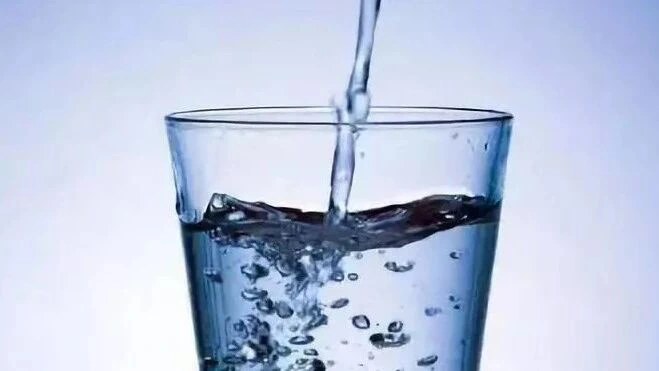
Figure 1: Drinking water.
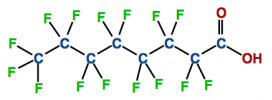
Perfluorinated compounds are synthetic chemicals: a class of organic compounds with a distinctive structure. Organic compounds consist mainly of carbon and hydrogen, potentially combined with other elements such as oxygen, nitrogen and sulfur. Perfluorinated compounds arise when all the hydrogen atoms attached to carbon in ordinary organic compounds are replaced by fluorine. This distinctive structure gives them strong chemical stability.
Figure 2: The structural formula of perfluorooctanoic acid.
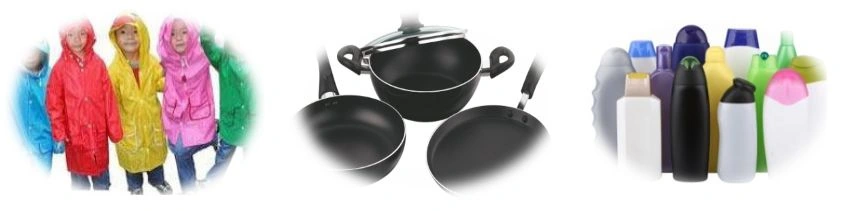
Within the broad class of perfluorinated compounds, perfluoroalkyl carboxylic acids (PFCAs) are most commonly used, followed by perfluoroalkyl sulfonic acids (PFSAs). The 8-carbon compounds perfluorooctanoic acid (PFOA) and perfluorooctanesulfonic acid (PFOS) are, respectively, the most widely used and most frequently detected environmental pollutants in these two groups. Their structures contain a fluorine-bearing carbon chain and an acidic group. We can picture them as long snakes: a tail covered in fluorine that does not readily associate with water, and a water-friendly acidic head. This special structure gives perfluorinated compounds water repellency and chemical stability, leading to widespread use in industrial and household products. Common products containing them include fire-resistant and waterproof clothing or materials, nonstick cookware, fast-food packaging, personal-care products and some electronics. Their widespread use in industrial and everyday products has greatly expanded their sources of release.
Figure 3: Everyday products containing perfluorinated compounds.
Their distinctive structure not only provides the properties needed for chemical coatings and related materials, but also makes perfluorinated compounds highly resistant to oxidation and biodegradation. They are therefore difficult to break down naturally and readily accumulate in natural environments and organisms. This is one reason they have attracted increasing scientific attention as emerging pollutants. Another is that they have been shown to increase the risk of reproductive and endocrine-system disorders and may even cause cancers and reproductive diseases in humans and animals.
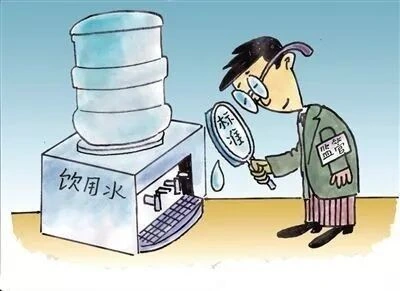
Perfluorinated compounds present in the environment do not affect human health if they are not taken into the body. At high concentrations in drinking water, however, they may be harmful. Their concentrations in natural waters can range from a few to several hundred nanograms per liter. Some of these waters serve as drinking-water sources, making the compounds potential drinking-water contaminants. Although further research into their effects on human health is still needed, scientists and environmental authorities worldwide have begun to prioritize them. The US Environmental Protection Agency (USEPA) included perfluorinated compounds in its Fourth Contaminant Candidate List, issued in late 2016[1]. Inclusion on this list means that a contaminant is receiving priority research attention and may be included in new regulations and standards. For the two most common perfluorinated compounds, PFOA and PFOS, USEPA issued a drinking-water health advisory of 70 ng/L[2,3]. Health Canada also issued drinking-water guidelines, with a maximum acceptable concentration of 0.2 μg/L for PFOA[4] and 0.6 μg/L for PFOS[5]. As expectations for safe drinking water rise and research into perfluorinated compounds deepens, these substances may be included in an increasing number of drinking-water regulations and standards.
Figure 4: Drinking-water standards. (Image source: http://news.163.com/12/0311/10/7SAEARBH00014JB6.html)
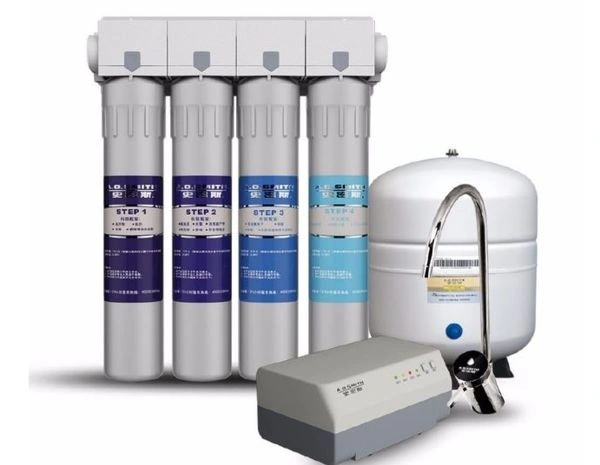
Having discussed the potential hazards of perfluorinated compounds in drinking water, let us finish by considering their removal. Drinking-water treatment methods such as advanced oxidation, biological filtration membranes and conventional coagulation and sedimentation cannot effectively remove them. Processes that perform better include activated-carbon adsorption, ion exchange and high-pressure membrane treatment. Because high-pressure membrane treatment has relatively high operating costs, activated-carbon adsorption and ion exchange have become popular approaches to removing perfluorinated compounds from drinking water. Household water-purification equipment generally includes at least activated-carbon adsorption, which can effectively remove these compounds.
Figure 5: A household water purifier. Image source: http://wap.jiameng.com/simesijshq
*This article represents the author's personal views, not those of this website. Other media, websites or individuals reproducing material from this website must acknowledge its source and assume responsibility for copyright and other legal matters. Authors who do not wish their work to be reproduced, or who wish to discuss reproduction fees or related matters, should contact us.
References:[1] USEPA. Drinking water health advisory for perfluorooctanoic acid (PFOA). 2016.
[2] USEPA. Drinking water health advisory for perfluorooctane sulfonate (PFOS). 2016.
[3] USEPA. Drinking water contaminant candidate List 4 (CCL 4) and regulatory determination. 2016.
[4] Health Canada. Perfluorooctanoic acid (PFOA) in drinking water. 2016.
[5] Health Canada Perfluorooctane sulfonate (PFOS) in drinking water. 2016.
Images from the matching WeChat article
The following images were recovered from the matching article retained by the WeChat account and restored in their original order.
Additional images were recovered from the matching article retained by the WeChat account and grouped after the main text. The historical archive text and existing editorial corrections are preserved.