English translation of the original Chinese article. Publication dates and the extent of recovered text are preserved. Figures retain their original labels. Read the Chinese original.

Cancer has become one of the world's major threats to human health. Current treatments mainly include radiotherapy, chemotherapy and surgical removal. These conventional treatments often cause a range of side effects [1], making the development of safe, effective new cancer therapies an urgent challenge.
What Is Phototherapy?
Phototherapy is a research and treatment approach that uses light of a particular wavelength to activate photosensitizers or photothermal materials for localized treatment of a lesion. Its two principal forms are photodynamic therapy (PDT) and photothermal therapy (PTT), as shown in Figure 1.
PDT illuminates photosensitizing molecules that can be activated by a particular light wavelength, producing singlet oxygen capable of killing tumor cells [2]. PTT instead illuminates photothermal agents, such as indocyanine green or inorganic nanoparticles, generating heat that raises the temperature locally at the lesion and kills tumor cells [3].
Compared with conventional treatments, phototherapy can concentrate illumination and drug action at the lesion as much as possible, reducing some damage to normal tissues. However, the penetration depth of light is limited by tissue properties, wavelength and other factors, and side effects such as normal-tissue injury and photosensitivity reactions can still occur. Phototherapy is not suitable for every tumor. The safety and clinical uses of photothermal materials must also be assessed for each specific material and treatment regimen.
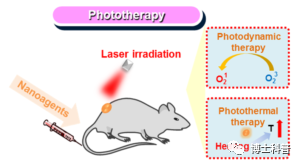
Figure 1: Schematics of photodynamic and photothermal therapy.
As science and technology advance, combining phototherapy with other treatments, such as chemotherapy drugs and emerging immunotherapies, can provide excellent integrated diagnostic and therapeutic effects. It is hoped that in the near future, multifunctional approaches incorporating phototherapy will present new opportunities and challenges for the next generation of cancer treatment.
References
[1]Peer, D.; Karp, J. M.; Hong, S.; Farokhzad, O. C.; Margalit, R.;Langer, R. Nat. Nanotechnol. 2007, 2, 751-760.
[2] Dolmans, D. E. J. G. J.; Fukumura, D.; Jain, R. K. Nat.Rev.Cancer 2003, 3, 380-387.
[3] Yang, K.; Feng, L.; Shi, X.; Liu, Z. Chem. Soc. Rev. 2013, 42,530-547.
Additional References
The text was recovered from the matching article retained by the WeChat account, with the original site's publication record preserved. The old WeChat promotional layout has been removed, and available original illustrations have been restored.
Editorial note: Restoration and correction on 2026-10-10: removed generalizations that photosensitizers are safe and nontoxic and that unilluminated sites experience no side effects. Added limits including light penetration and injury to normal tissues, while retaining the original outlook on research.